
It’s Nobel Week in Stockholm! I was delighted to accept the invitation of the Nobel Foundation to join the five University of California-affiliated Nobel Prize winners at the awards ceremony along with other events during a very full and inspiring week. This seemed like a once-in-a-lifetime opportunity to celebrate the extraordinary contributions of UC to science and to do anything we can to highlight the importance of the longstanding and successful contribution to research by the federal government. This year’s remarkable achievement by UC scientists is unparalleled in Nobel history.
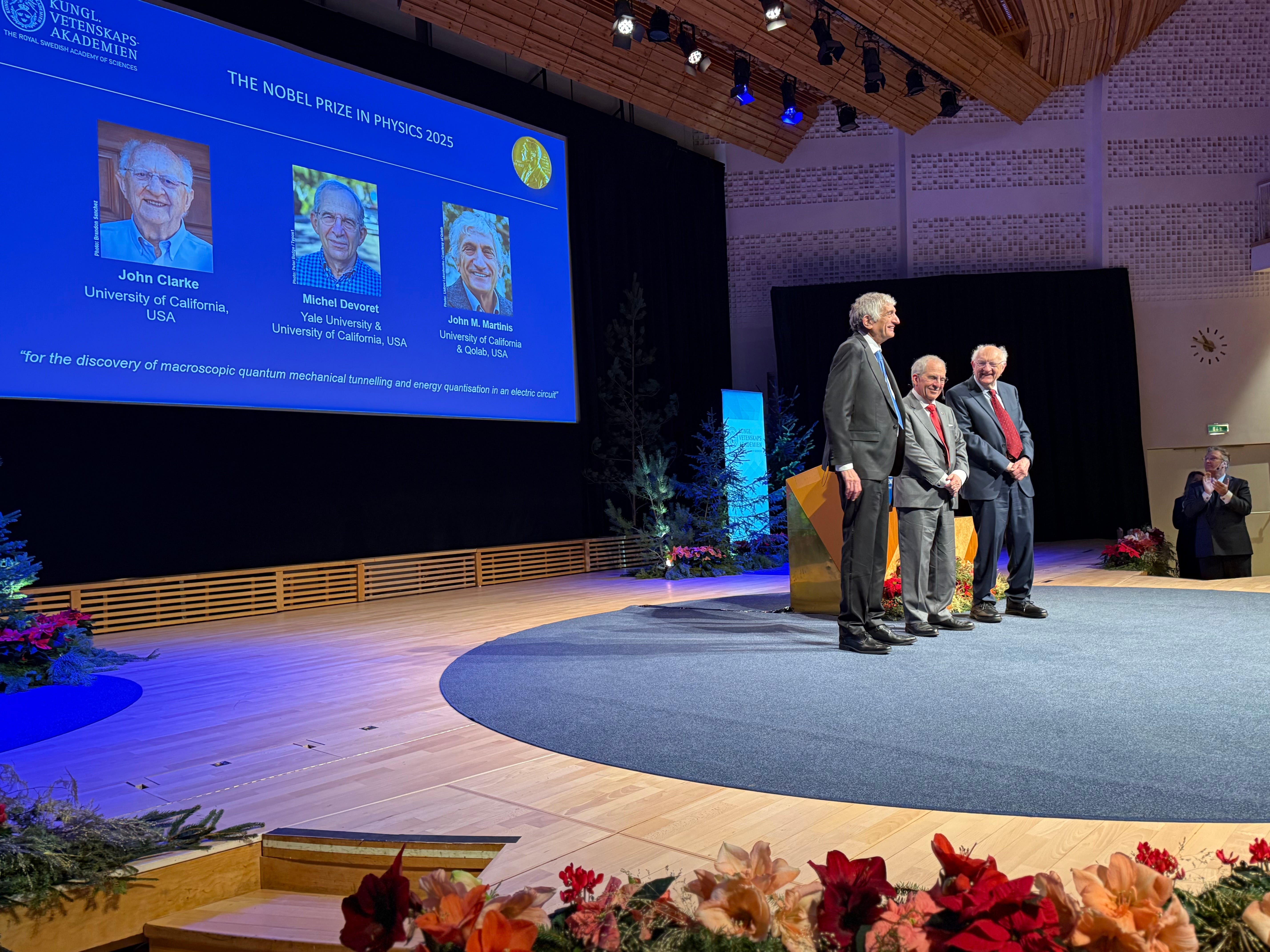
To kick off the week, I attended the Nobel Lectures on Monday. You can watch them here. First on the docket were the talks by the physics prize winners John Clarke, Michel H. Devoret, and John M. Martinis, summarizing their groundbreaking work. At the conclusion, the audience gave them a rousing standing ovation while the Nobelists stood onstage, under a screen that identified each of the three winners as representatives of the University of California.
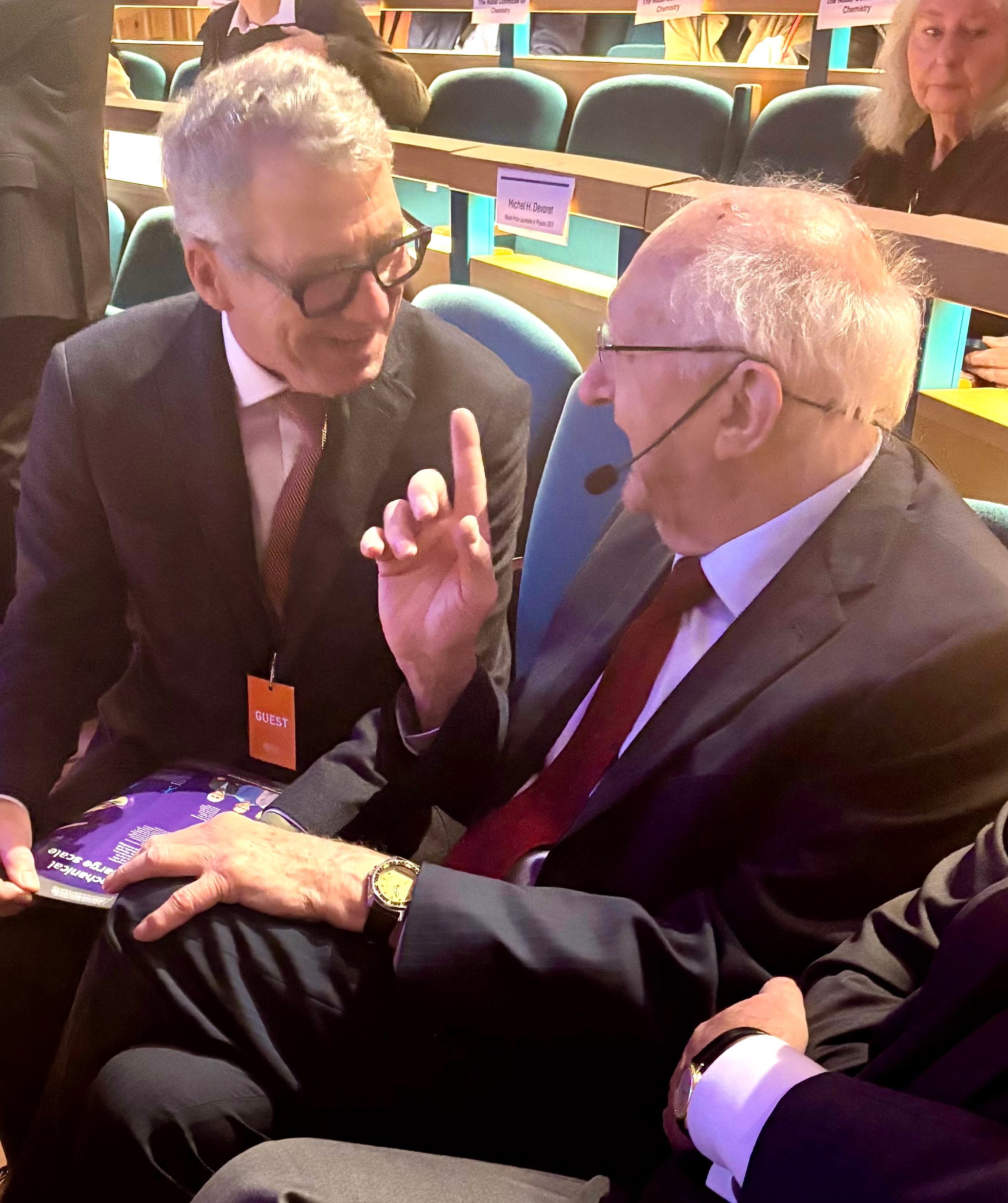
And here’s a picture of professor Clarke telling me about his move from Cambridge to Berkeley in 1968 and why he spent the rest of his career at UC.
I only wish I could share this with my high school physics teacher!
Next were the chemistry lectures, where gaps in the education of this lawyer were further revealed. Professor Omar Yaghi described his pioneering work developing reticular chemistry and metal-organic frameworks that have been used to harvest water from desert air and filter carbon out of the atmosphere with remarkable efficiency.
Sadly, I missed the lecture by our final UC-affiliated Nobelist, Fred Ramsdell, a UCLA and UC San Diego alumnus, who gave his Nobel Lecture on December 7, a day before I arrived. He talked about his work on the immune system and how regulatory T cells prevent the immune system from harming the body’s own tissues.
Finally, I stayed for the lectures by the prize winners in economics. No UC representatives in this group, but the subject matter was a bit more familiar to someone with a minor in economics, including fascinating work advancing Schumpeter’s theory of creative destruction. The theory was first used to describe capitalism and the incessant process of new innovations displacing old ones.
Throughout the day — over six hours of compelling talks by some of the most accomplished scholars in the world — I was continually struck by the incredible impact of the world’s best universities. Each of these remarkable thinkers did most, if not all, of their work as faculty members at leading universities, sustained by grants that allowed them to advance knowledge in fundamental ways. The most successful model of this support is, of course, that of the funding agencies of the U.S. government, beginning in the post-World War II era. I wrote on this history recently in the LA Times, tracing how federal investment created the research engine that still drives American innovation today.
I’ll have more to say about the Nobel activities and the recognition of UC and its outstanding representatives of whom the world is taking special notice this week.
amazing! what a historic moment for UC!
💛💙