Postcard from Merced

I recently visited UC Merced and witnessed its remarkable trajectory firsthand. UC Merced is the youngest campus in the UC system, founded in 2005 and built entirely in the digital age. It also achieved designation as a Carnegie R1 university faster than any other institution, earning the honor in February of last year in recognition of its research activity.
UC Merced sits at the edge of the San Joaquin Valley, surrounded by some of the most productive farmland in the world. This past fall, 40% of its incoming students came from the Valley itself, and more than 60% are Pell-eligible and are the first in their families to pursue higher education. The campus is, by any measure, starting from a different place than most research universities. But what struck me during my visit is how much that difference is a strength.
A campus only two decades old carries less institutional inertia. It has fewer historical precedents to navigate, fewer entrenched habits to overcome. In this consequential moment for higher education, when the ability to adapt quickly is essential, UC Merced is set up to lead. And from what I saw, they already are.
While on campus, I spent time with faculty from disciplines that ran the gamut from archaeology to physics. We discussed the future of higher education and the impact of AI on teaching and learning. We talked about how students are choosing their majors and how that informs faculty thinking on program offerings, as well as providing students with protected and secure AI platforms. UC Merced’s relative youth shapes how faculty approach these questions. With fewer inherited structures and assumptions, they are helping define what the next phase of higher education will look like.
Chancellor Muñoz has a clear vision for UC Merced to become a leading university in the country at the intersection of agriculture and technology. Reflected in this vision is the Merced Experimental Smart Farm, a 40-acre living laboratory. Faculty, graduate students, farmers, ranchers, and industry partners work side by side on some of our state’s most pressing challenges: water conservation, greenhouse gas reduction, and addressing hunger. One particularly interesting project I learned about was the conversion of almond shells and orchard prunings into biochar – a type of charcoal that help soils store carbon and potentially reduce greenhouse gas emissions.


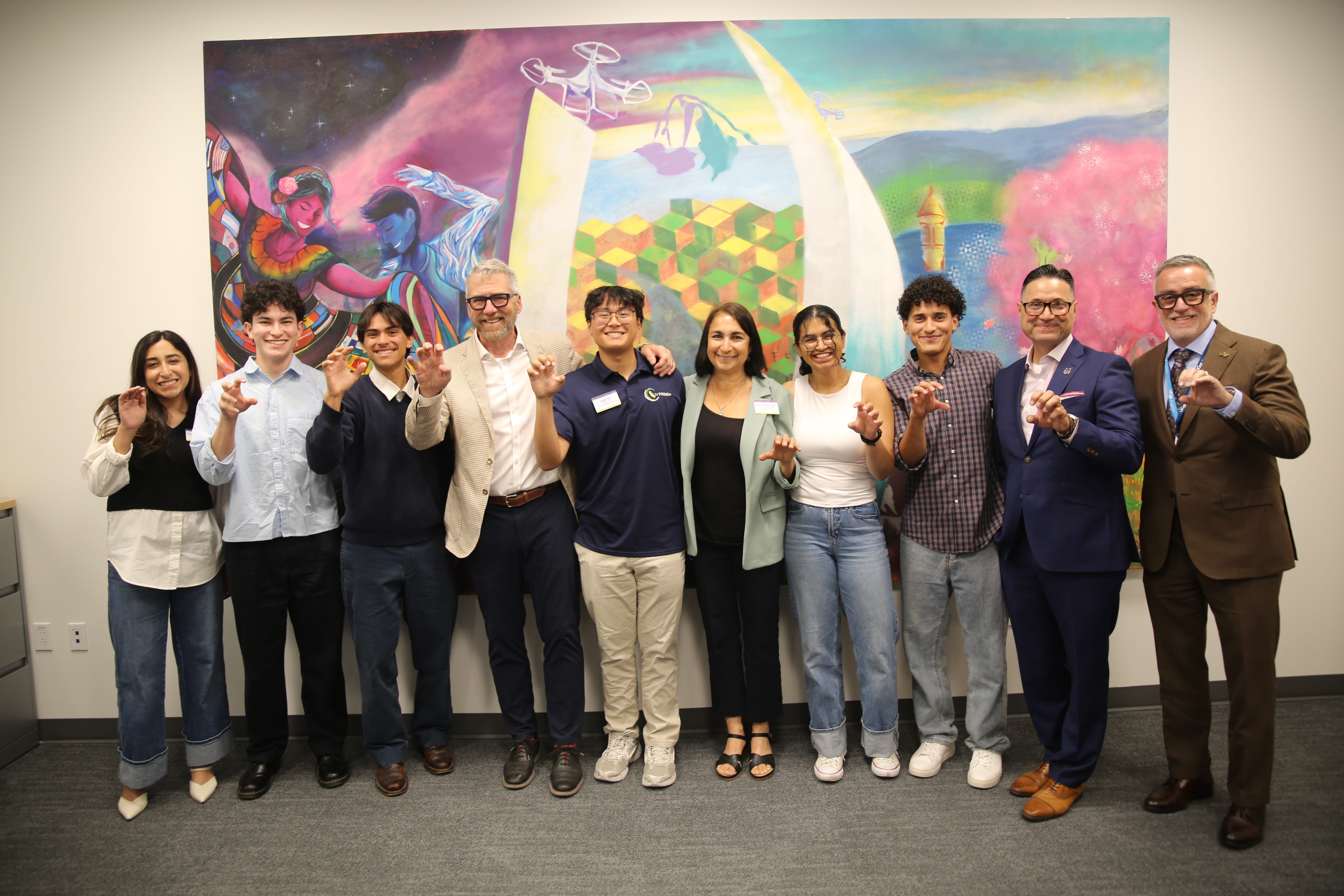
Merced’s PRIME+ program is further evidence of the university’s connection and commitment to the Valley. I got to meet the program’s inaugural cohort of undergraduates who want to practice medicine in the communities where they grew up, including the Valley. Upon acceptance into the program as first-year undergraduates, they’re provisionally admitted to medical school and, as long as they remain in good standing, can continue directly into their medical education without taking the MCAT. I toured a soon-to-be-completed medical education building and saw wet labs and biochemistry labs take shape. The urgency of this project is palpable. A region with one hospital and an overwhelmed emergency room is counting on this program and UC Merced’s partnership to expand health care access to a population in need.

UC Merced understands both its “where” and its “why.” That is no small thing. Many institutions know their rankings, but fewer understand their communities as intimately as Merced does. I am grateful to Chancellor Muñoz and the students, faculty, and staff who made my visit so memorable and so instructive about what a young, ambitious, and unencumbered university can be. I’m so excited to see what they do next.
I've been equally impressed and struck by this remarkable campus in my two visits there. I really enjoyed this post by our UC President.