
I recently spent a day at UC Santa Cruz with Chancellor Larive, faculty, students, staff, and campus leaders.
The campus sits among redwoods overlooking Monterey Bay, connected by a web of pathways and pedestrian bridges between the academic buildings of individual colleges. Our tour took us from McHenry Library and Cowell College through the Great Meadow and Kresge College to the Baskin School of Engineering.
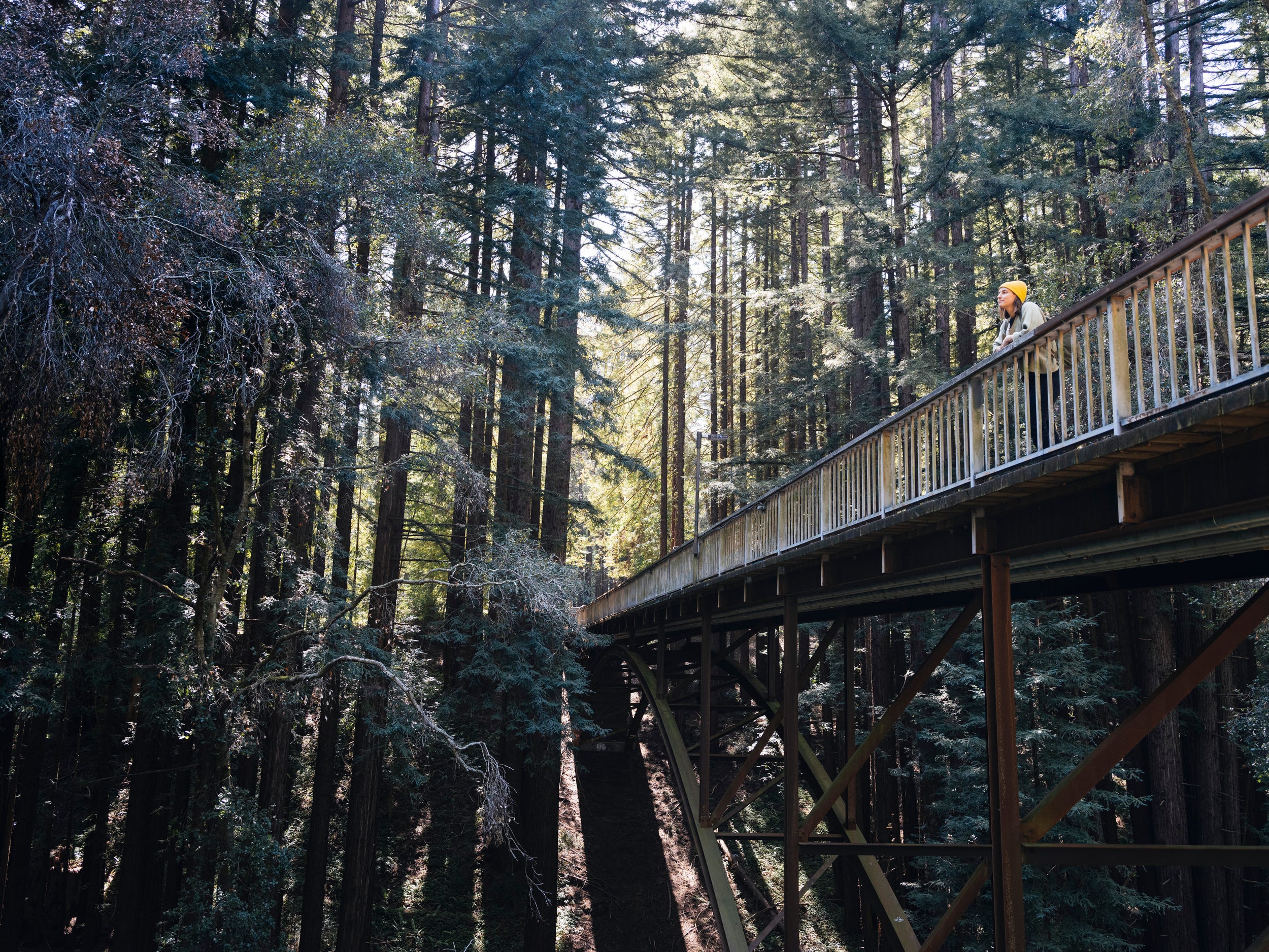
The setting is truly striking. It also reflects UC President Clark Kerr and founding Chancellor Dean McHenry’s desire to combine the intellectual intimacy of a liberal arts college with the breadth and depth of a major research university. By the end of the tour, I’d added Santa Cruz to the growing number of UC campuses that should have been at the top of my list when I was choosing where to go to college.
I have asked about AI and its implications for higher education during each of my campus visits, and at UC Santa Cruz it served as the subject of some of my most interesting conversations.
I spoke with faculty from philosophy, linguistics, history, and literature, along with campus leaders responsible for technology and educational innovation. We discussed concerns about student learning, how to evaluate their work, what skills they will need, and how universities should respond to these rapidly evolving tools.
I came away impressed by these faculty members’ thoughtful engagement with these challenging questions. I have always thought that universities should be places where new technologies are tested, studied, debated, and improved, and I am encouraged to see folks across UC doing just that. I also spoke with students about their attitudes toward AI and their concerns. Their perspectives are critical in this conversation as they are thinking about this technology’s role in their education and the workforce they are preparing to enter.
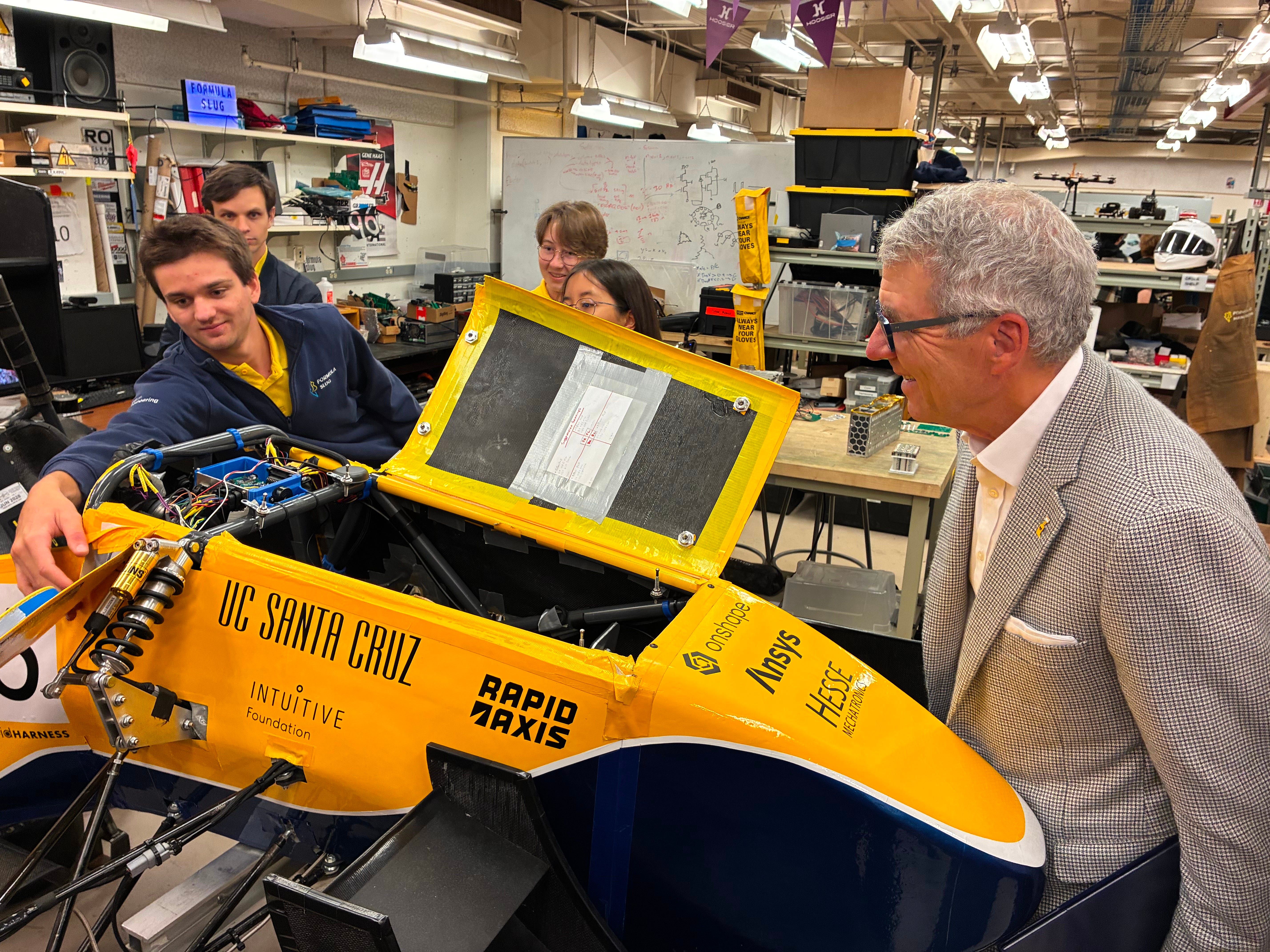
I particularly enjoyed my time with students at SlugWorks. They have spent a chunk of their summer designing and building projects ranging from rockets to a prototype F1 car. Their enthusiasm was infectious, and their discipline and devotion came through in our time together.
Our last stop of the day was the Coastal Science Campus for a discussion about astronomy and astrophysics, and I learned more about UC Santa Cruz’s strength in these fields. (I was also fortunate to attend a celebration of Lick Observatory’s 150th anniversary the same week as my visit, which highlighted several breakthroughs by UC Santa Cruz researchers and other UC scientists in the field.)
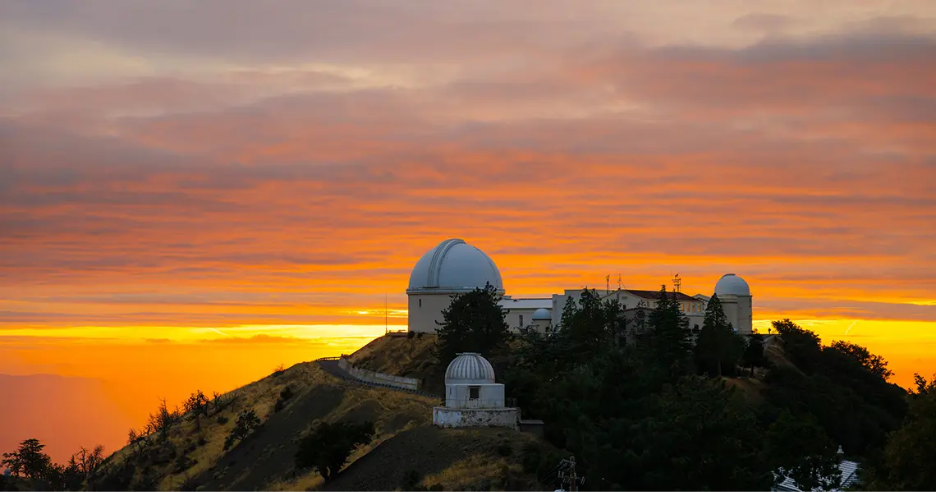
With this group, I discussed a question facing research universities across the country. How do we sustain the pipeline of people and resources that carry out cutting-edge research despite present uncertainty and unprecedented disruptions?
Scientific discoveries often depend on years of work by graduate researchers, postdoctoral scholars, faculty, technical staff, and many others. Furthermore, they require sophisticated instruments and laboratory facilities that have historically been sustained through funding and partnerships with federal agencies. Research universities create environments where talented people can pursue challenging questions while simultaneously educating the next generation of researchers who will carry that work forward.
UC Santa Cruz offers an impressive example of this. I left thinking about the range of work taking place there: from students experimenting at SlugWorks to faculty wrestling with the implications of AI for learning to astronomers studying some of the biggest unanswered questions about the universe.
I have enjoyed learning more about the distinct histories, cultures, and strengths of our campuses during my visits. Together, they demonstrate the remarkable breadth of the University of California.
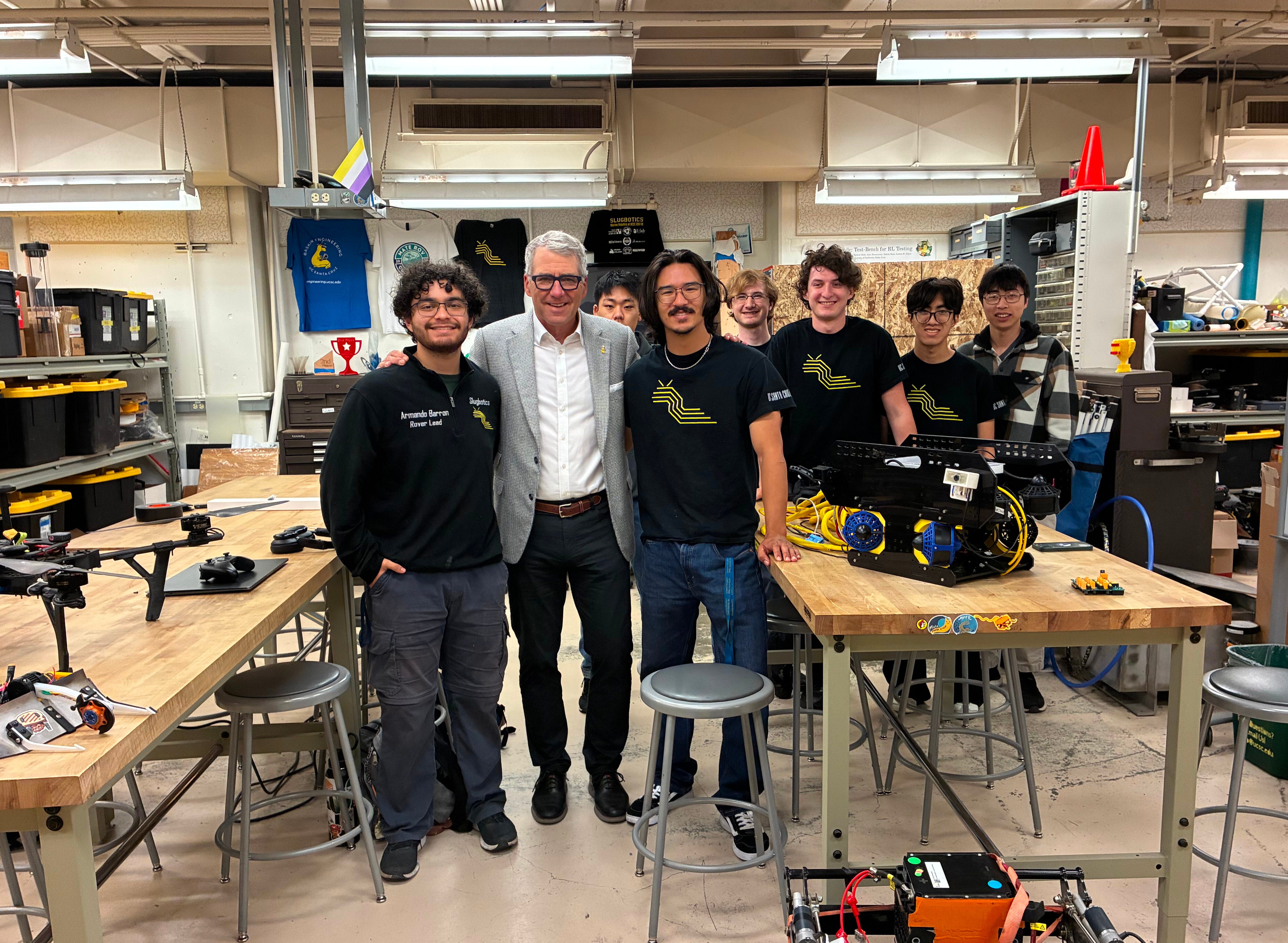
I am grateful to Chancellor Larive and the faculty, students, and staff who took time to visit with me. I learned a great deal and look forward to channeling John Travolta and representing the Banana Slugs with my new hat and Slugbotics T-shirt!
Fiat slug!